Latest work



 Jez Clark
7 min read
Jez Clark
7 min read
The built environment speaks to us. Not just through its physical presence, its network of services, technology and products - but through its words.
From the brazen headline on a billboard to the subtle reassurance of a product description, every syllable shapes perception, builds trust and nudges action.
Evidence-based marketing tells us that the language we land on isn’t just decoration; it’s a precision tool.
The right words don’t just describe, they persuade. They don’t just inform, they resonate.
And in a world where attention is curtailed and the competition fierce, the difference between forgettable and formidable often comes down to the words.
Let’s start with calling out names.
They carry weight. In property development, a well-chosen name can elevate a building from just a physical structure to an aspirational lifestyle. There’s a difference between ‘22 The Edge’ and ‘22 High Street’ One evokes modernity, the other is just an address.
A name like ‘Harbour Lights’ doesn’t just tell you where a building is, it sells a shimmering waterfront dream. ‘The Canopy’ suggests lush, secluded greenery and tranquility. Carefully chosen, emotionally-charged names paint a picture in the mind and increase perceived value and desirability.
Treating any kind of naming as an afterthought misses a critical step in the branding process.
A product name can transform a commodity into a coveted choice. What’s the difference between ‘Standard White Paint’ and Farrow & Ball’s ‘All White’? One is forgettable, the other implies curated simplicity.
Rory Sutherland, vice chair of Ogilvy, argues that “people don’t buy products, they buy better versions of themselves.” Which is precisely why B&Q’s ‘GoodHome’ range outperforms its competitors. It doesn’t just sell paint or flooring, it sells the notion of a better home. Similarly, Crown’s ‘CRAFTED™’ range isn’t just a paint; it’s warmth, heritage and craftsmanship in a can.
In categories like plumbing, choice words take you somewhere. A product named ‘Premium Brass Tap’ is functional, but ‘Heritage Victorian Mixer’ suggests something more: tradition and durability. It doesn’t just fill a specification, it begins to tell a story.
“Your brand is a story, and the name is the title,” Mark Ritson reminds us, “so make it a page-turner.”
There’s a three-second rule of engagement. Your headline has seconds to capture attention, whether on a 48-sheet, bus back, brochure, digital ad or a social post. Dave Trott, the legendary adman, said: “People ignore boring. They always have, they always will.”
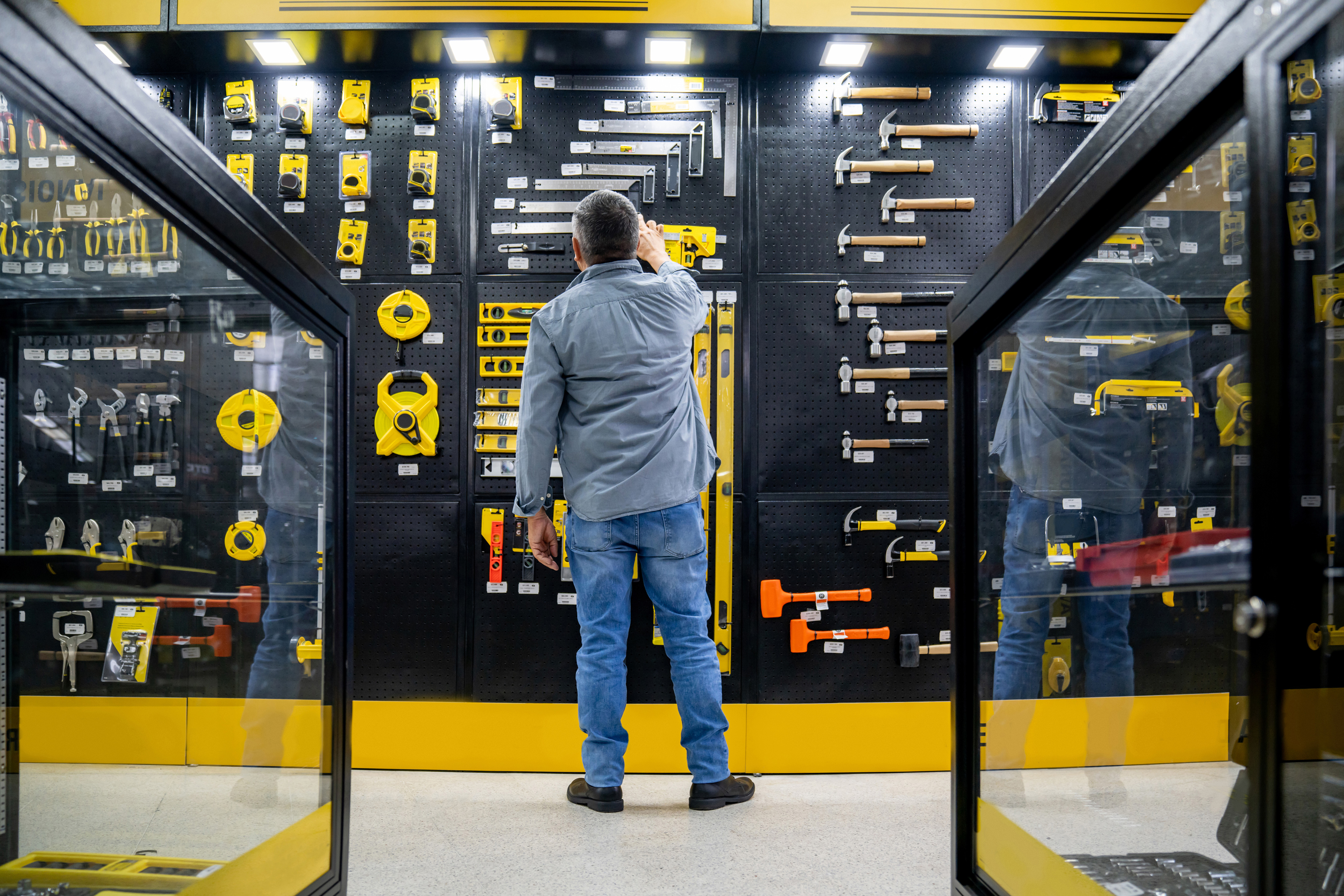
In the busy retail sheds and counters like Wickes or Screwfix, where customers are bombarded with options, the right headline cuts through the noise.
Take a statement seen in Topps Tiles’: ‘The UK’s biggest tile specialist’. It’s simple, confident and reassures shoppers they’re in the right place with the right people. ‘Quality tiles at great prices’ is a weaker alternative that attempts to claim, while the other makes a promise.
In DIY, emotion sells. Crown Paints doesn’t just say ‘durable exterior paint’. It asks you to, ‘Love your home for longer’. This reframes the product from a thankless maintenance job to an act of pride. Similarly, when B&Q implores you to ‘Make your house a home’ it taps into aspiration, not just functional maintenance..
Using an unexpected emotional pull in an environment where specs dominate gives you a competitive edge.
A boiler manual that says, ‘For optimum efficiency, regular servicing is advised’ is dry and forgettable.
Worcester Bosch opts for, ‘Regular servicing keeps your home warm without the worry’ turning cold instruction into welcoming reassurance.
Instead of Tredaire getting mired in specifications, they roll out the superior and emotional benefit of an underlay that ‘Feels like nothing on earth.’
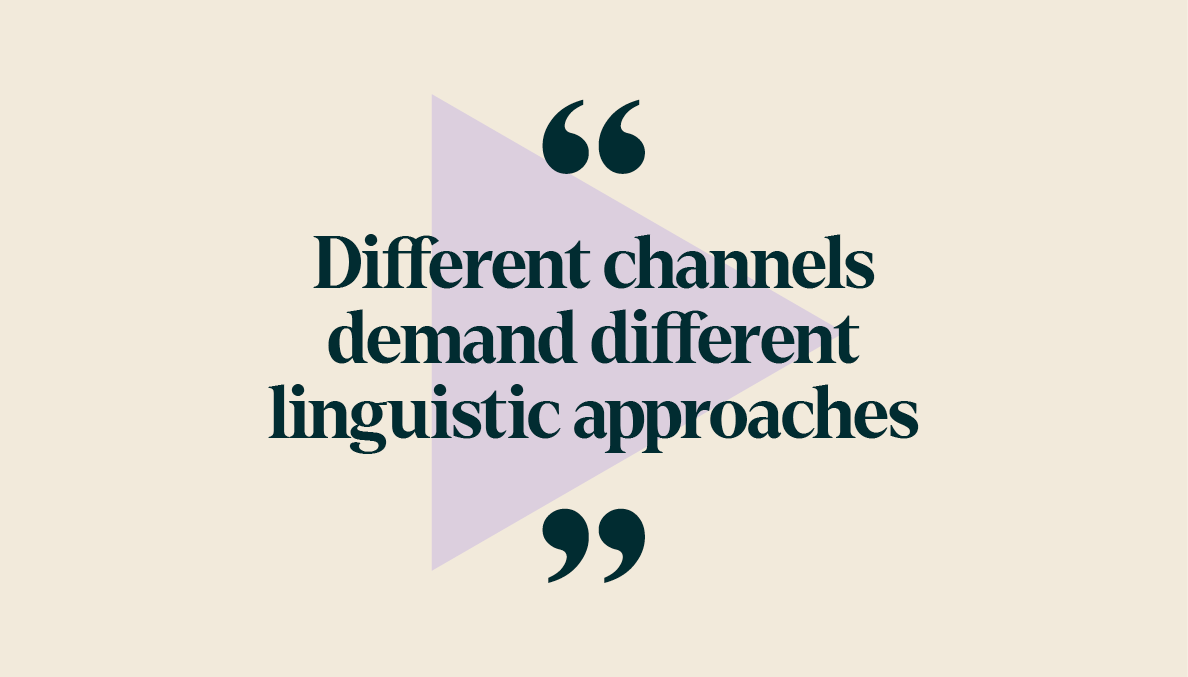
Different channels demand different linguistic approaches; a trade brochure might boast spec like ‘BS EN-compliant copper piping’ but on Instagram, the same product becomes ‘The pro plumber’s secret to leak-free joints.
A Screwfix email subject line declares ‘Deals ending at midnight’ create urgency, while their in-store signage, ‘Trade prices, no fuss’ reinforces their no-nonsense, straight-talking value.
Meanwhile, their YouTube tutorials use friendly, jargon-free language, ‘How to fix a dripping tap in 5 minutes’, making DIY feel completely do-able.

For trade buyers browsing Selco’s or Travis Perkins’ online catalogue, trust is everything. The language must balance technical precision with approachability. This is where authenticity is the bedrock of persuasion.
A product description like ‘High-performance adhesive for heavy-duty applications’ is accurate, but lacks dynamism.
Ardex tile adhesive, on the other hand, offers you: ‘The grip you need, without the wait.’ It’s technical enough for professionals, but speaks to their real pain point of downtime.
Buyers can sniff out trite, adland superlatives, but a confident, human tone builds credibility.
Research on click-through rates shows that headlines with emotional triggers outperform generic ones by up to 40%. A development selling ‘Luxury city living’ is forgettable and possibly lazy. One offering ‘A sanctuary above the chaos’ creates a visceral pull.
Well-placed headlines that don’t just describe an offer can promise transformation: ‘Live where the city can’t keep up’. Or spark curiosity: ‘This isn’t just a home, it’s a real retreat.’ Or even trigger urgency: ‘Last two apartments remaining.’
Language doesn’t just sell, it assures. In an industry where purchases are high-stakes and trust is paramount, tone of voice is your silent sales rep.
Finding your voice and then flexing your core tone of voice across different channels is a careful balance. After all, trust is built through consistency, clarity and empathy. A disjointed tone that’s corporate here, casual there, confuses. A distinct, cohesive voice reassures.
Yet, language shape-shifts to platforms. A 48-sheet poster demands brevity and immediacy. A website needs relevant content. Social media thrives on quick-fire personality and connection. The same message must flex without losing its core.
Outdoor ads need bold language like: ‘Your view starts here.’ Brochures have the luxury of weaving a narrative: ‘From the moment you step inside, your journey begins…’
While social posts thrives on conversational hooks:
‘Your boiler’s silent cry for help… (and how to fix it).’
British Gas on X
‘The cordless drill that’s tougher than a Monday morning.💪’
Toolstation on LinkedIn
£10 off when you spend £50 - but only if you’re quick.’
Selco on Facebook
‘Is this the perfect neutral? (Spoiler: Our customers say yes.)’
Farrow & Ball on Instagram Stories
‘Small bathroom? These tiles will trick the eye into seeing space. 🎨’
Topps Tiles on Pinterest
‘We won’t judge if you spend more time staring at your newly painted wall than your TV tonight. 😏’
Crown on Facebook
‘One coat or two? Here’s how to actually get away with just one (and when you definitely can’t).’
Crown on X
Context changes meaning. A headline that works on an OOH poster won’t always, work in an email. Adaptation isn’t diluting your brand’s tone, it’s flexing it and keeping it relevant for the audience, where they are on the customer journey and context.
Copywriting is the ultimate ROI multiplier. In the built environment, where investments are sizeable and decisions slow, language is the bridge between interest and action. Not clever words, just the right words.
As digital marketer, Neil Patel puts it: “The most effective marketing doesn’t feel like marketing. It feels like a conversation.”
In a sector driven by dreams as much as bricks and mortar, the best copy doesn’t just sell spaces, it sells the ambitions, aspirations and life that goes on inside them.
And that’s the first step in turning browsers into buyers, buildings into lasting legacies, and supplies into sales.
...Then we'd love to share more perspectives with you. Click below to download our unique quarterly magazine for the latest insights on all things brand and marketing in the Built Environment.