



 Nicky Jepson
5 min read
Nicky Jepson
5 min read
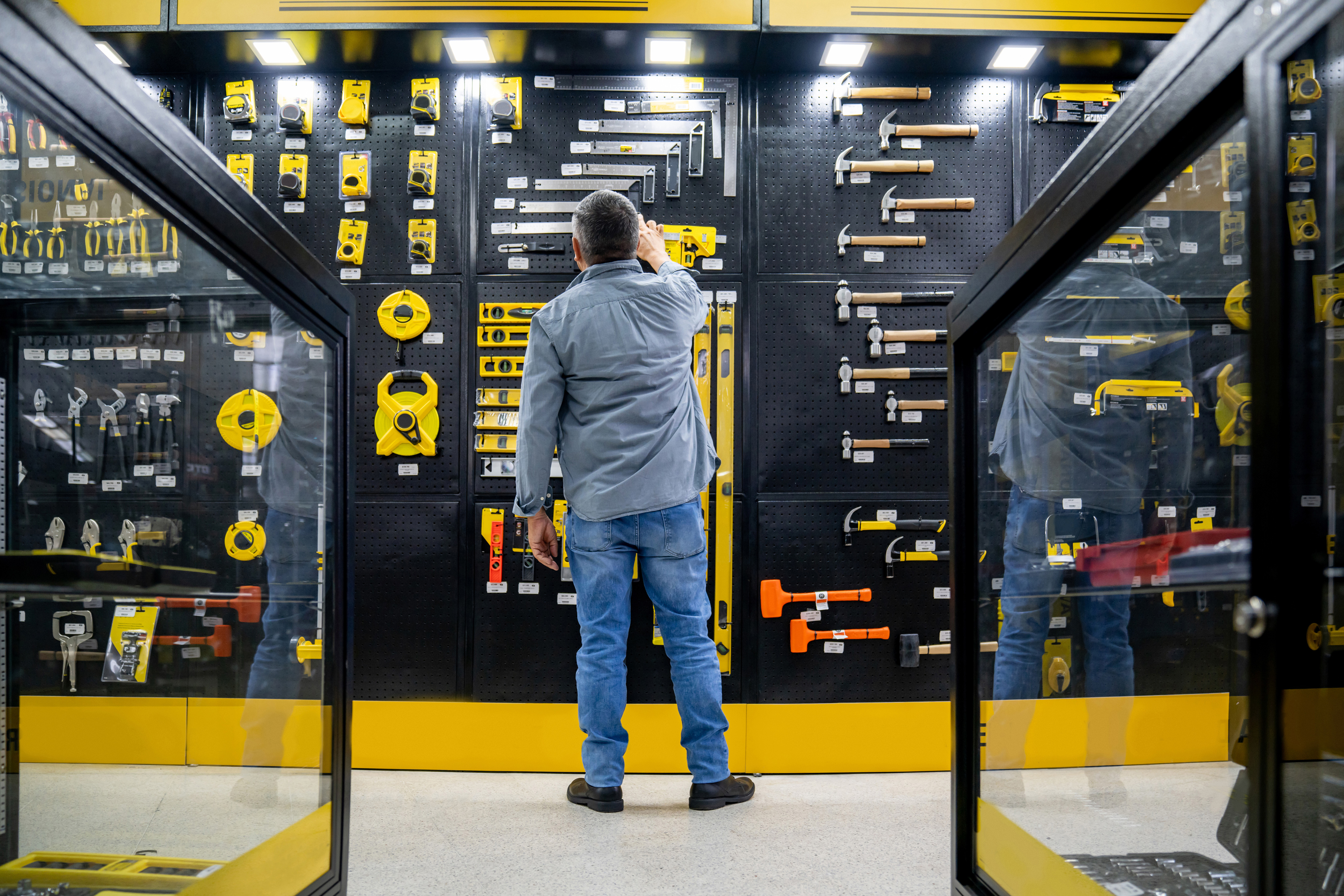
Walk into most trade outlets and you'll see the same thing: promotional posters fighting for attention, supplier POS stacked three deep, wayfinding that makes no sense, and pricing messages shouting over each other.
It looks busy. It feels chaotic. And somewhere in all that noise, your actual value proposition has gone missing. It's an identity crisis that can't be solved by new signage or a fixture reshuffle alone.
Not all merchants can clearly articulate what they stand for. So they try to be everything at once: a trusted adviser, a price leader, a digital innovator, a relationship builder. The result? Your trade customers get confused and your marketing becomes a defensive exercise.
And right now, with the BMF reporting a stagnant market and volumes up but prices falling, you can't afford to waste energy on activity that doesn't build towards something coherent.
Trade merchants exist in an identity gap.
You're not a global soft drinks brand with emotional budgets and years to build salience.
Neither are you a top five supermarket with promotional muscle and basket economics. Yet most merchant marketing strategies borrow from one camp or the other.
Brand thinking tells you to play the long game, tell stories and build emotion. Retail thinking demands you shift volume, promote price and drive footfall today. And you're stuck defending tactics that don't fit neatly into either framework, while being judged on metrics designed for businesses that look nothing like yours.
When your in-store experience is cluttered with competing promotions and your digital offering exists, but isn't embedded in how trade customers run their business, you're adding cognitive load they don’t need.
They expect speed, without friction. Expertise when needed, not generic product-pushing. Fair pricing, not constant discounting that erodes trust. Digital convenience, without losing human contact.
When we strip it back with the trades, the same themes come up: “They’re always open when I need them”, “They usually have what I want”, “They sort problems quickly”, “They don’t muck me about on price”, "I trust them".
The BMF's Branch of the Future report makes this explicit: customer expectations around convenience, personalisation, expertise and sustainability determine what branches need to deliver. Ignore that shift and you're competing solely on proximity and price.
A merchant mindset is being clear about who you serve, how you help your customers, and why you exist. That is; availability, expertise, reliability and relationship.
A merchant mindset takes those truths and builds everything around them: the branch layout, what gets space, how staff are briefed, how digital is positioned, and how you talk about value without turning into a never-ending clearance sale.
Reclaiming your identity doesn’t start with a rebrand. It starts with clarity. Decide what you want to be famous for among the trades you serve. Then let that dictate what stays, what goes and what changes. You’ll soon see the store layout becomes a tool, not a battleground. Promotional spaces become a curated edit of what fits your promise.
Online and offline stop competing. If you define digital as another branch, open 24/7, your KPIs change. You design the journey around the same working habits you see at the counter, and you brief staff to actively use digital as part of their everyday service. The goal is simple: the same offering, accessed through different doors.
This is where a creative agency that understands merchants can be useful, not by turning up with more stuff to cram into the branch, but by taking things away, helping you articulate precisely who you are for and what you stand for. And giving you the language you can use in the boardroom and at the bottom line, not just in a brand book.
The skill is in translating that stance into environments, campaigns and digital journeys that respect how trades really behave. Smarter ways to show off your availability, make your expertise visible, prove your reliability and bring your relationships to life. Done properly, creativity stops being an indulgence and becomes an action-provoking asset.
The most successful merchants over the next few years won’t be the loudest or the most aggressive discounters. They’ll be the ones whose branches feel like they’ve been designed around real working days; whose opening hours, stock discipline and digital tools save time rather than steal it; whose teams behave consistently because they’re not guessing what the brand stands for.
Stop copying the brands. Stop copying the retailers. Own the merchant mindset and work with partners who understand how to turn it from a phrase into a living, breathing experience for the trade. That’s where the steady growth and success is hiding.
...Then we'd love to share more perspectives with you. Click below to download our unique quarterly magazine for the latest insights on all things brand and marketing in the Built Environment.